
A sports-fashion catalogue with more to discover.

JD brings together sportswear, footwear and fashion. This story concerns the implementation described in Selectika’s supplied JD case study; it describes that implementation.

Make product knowledge consistent as the catalogue changes.
The ecommerce team needed consistent item information across its catalogue and a shopping experience that could be reviewed and adapted before launch.
The implementation brought product characterisation, retailer review and product-page recommendations into the same workflow.
From a dynamic feed to a reviewed storefront experience.
- Share the product feed.Selectika assigned a technical account manager. JD supplied a dynamic feed containing the information needed to identify its products.
- Enrich the item information.Visual recognition and automatic labelling extracted product characteristics. The account describes attributes such as garment type, sleeve length and pocket style.
- Review with the retail team.JD’s ecommerce team reviewed the functionality and requested tailored adjustments before launch.
- Activate the shopping experiences.Selectika’s account manager and JD’s team implemented the storefront script.
This is an account of a historical implementation. Discuss the scope of current Product Enrichment with Selectika.
Give shoppers a relevant next choice.
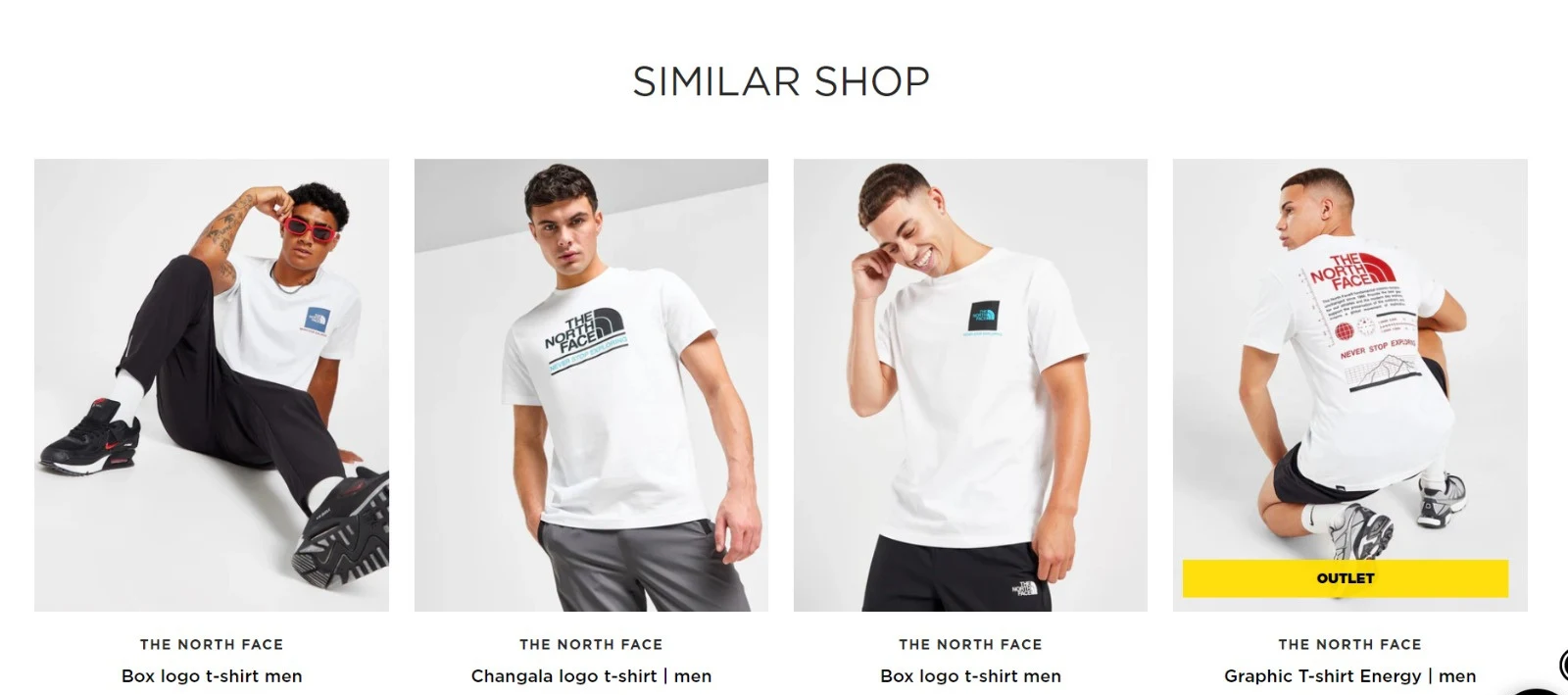
Shop Similar appeared on the product page, showing alternatives that resembled the item being viewed. The study describes the shopper’s last search as part of the context for those suggestions.
The product page linked the item being viewed with alternatives from the same catalogue.
Show how one item works with others.
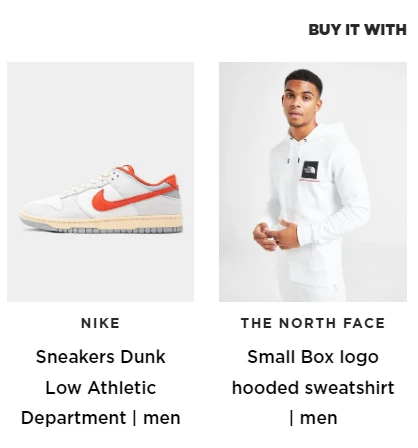
The historical AI Outfitting feature suggested complementary products. The source describes styling around trends, style, shopper preferences and budget; its storefront example brings a sweatshirt together with footwear and other pieces.
The storefront example connects a sweatshirt with footwear and complementary pieces.
Selectika’s current outfitting offering is called AI Outfitting. This account uses the company-approved terminology for a historical deployment; it does not imply that the deployment included every capability available today.
The storefront capabilities.
Product Enrichment
A dynamic product feed and ecommerce-team review connected catalogue information with the storefront.
Explore the capabilityShop Similar
Related items appeared alongside the product being viewed.
Explore the capabilityAI Outfitting
Complementary pieces were presented together in the product-page experience.
Explore the capabilityA shopper experience the team could see.
“We are thrilled by this platform. It has been an incredibly enlightening experience for both our shoppers and us”
Dick Hay, identified as E-commerce Director in Selectika’s JD case study.
Start with the retail decision you want to improve.
For a similar project, identify the catalogue fields that need work, the product-page decision to support and the team responsible for reviewing the experience. Agree the implementation scope, retailer rules and review responsibilities.
Source: Selectika, JD Case Study, supplied by the company. The account describes a historical implementation.