
The catalogue problem
Supplier feeds often describe similar products differently or leave useful details out. That creates manual work for catalogue teams and makes consistent filters and discovery harder to maintain.
From source data to usable product information
- Inputs: product images and item identifiers, plus any existing titles, descriptions and attributes.
- Processing: proprietary multimodal fashion intelligence identifies and normalises fashion details against a shared taxonomy.
- Outputs: structured attributes, generated product descriptions, tags and metadata for downstream commerce systems.
You do not need to write product descriptions before starting: Selectika can generate them from the supplied product imagery and catalogue context. Existing descriptions are optional. The agreed integration may require other catalogue fields; confirm those requirements for your implementation.
Built around retail workflows
Catalogue and PIM teams can fill gaps and align vocabulary. Search teams can use richer filters. Merchandisers can organise collections by style or occasion. Recommendation experiences can compare meaningful attributes rather than relying only on category labels.
Connect enrichment to your stack
The published API accepts batches of catalogue items with accessible image URLs. Processing is asynchronous: submit items, then retrieve enriched data or arrange webhook notifications. Brand vocabulary and mapping requirements should be agreed during setup.
A product image, a richer feed record
Imagine a shopper looking for a relaxed blue Oxford shirt. A record titled “Blue shirt” gives the receiving system little to work with. If supported by the images and catalogue facts, Selectika can add the shirt type, a sky-blue colour, a relaxed fit and a button-down collar. Those details give the system more ways to match the request.
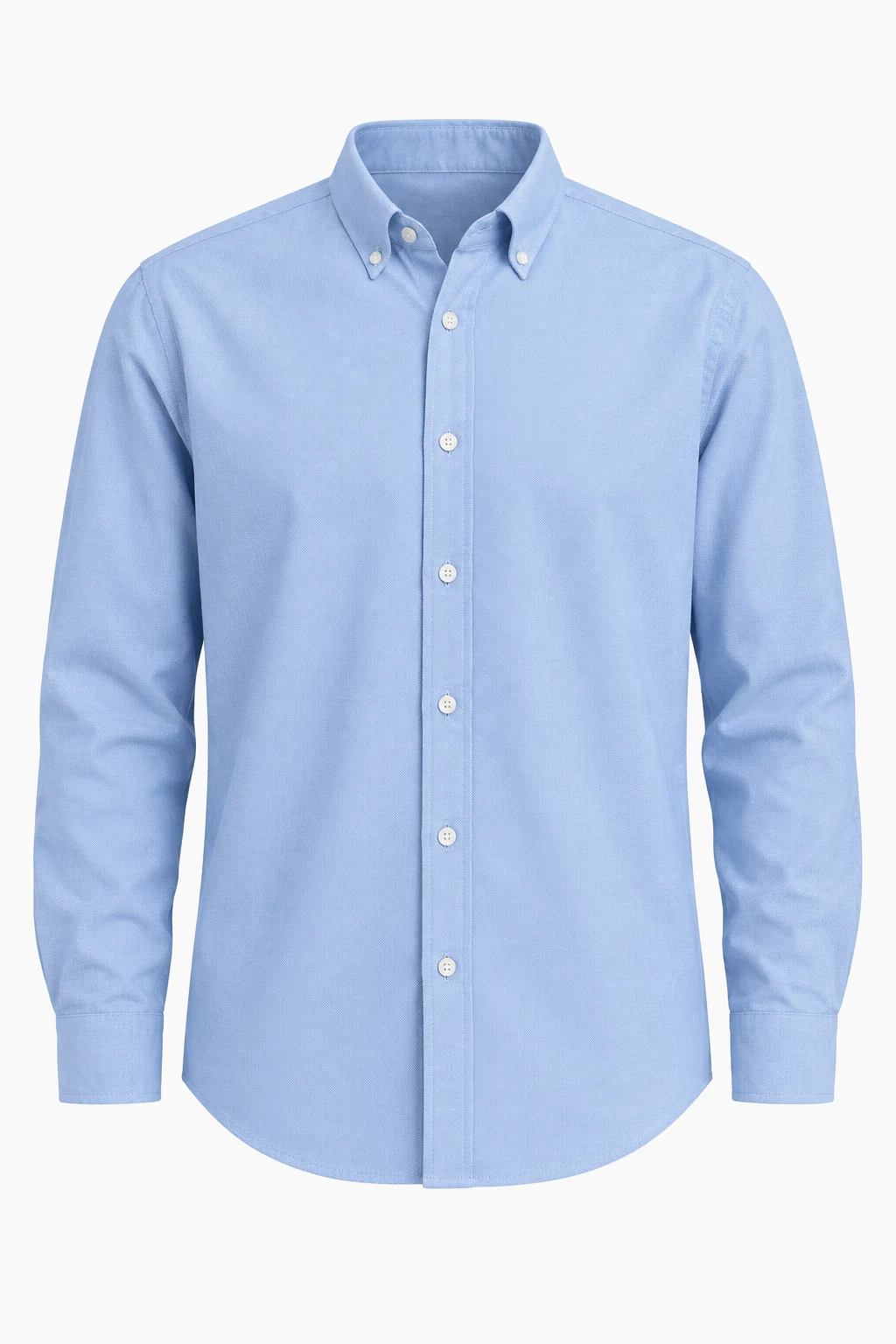
| Attribute | Original | Enriched |
|---|---|---|
| Title | Blue shirt | Relaxed blue Oxford shirt |
| Colour | Blue | Sky blue |
| Fit | — | Relaxed |
| Occasion | — | Work or weekend |
| Style | — | Casual |
| Collar | — | Button-down |
| Fabric | — | Cotton Oxford if confirmed by the supplier |
From an ivory slip dress image to usable attributes
A basic record says “Satin Slip Dress” and “Ivory”. An enriched record can add a V-neck, midi length, a sleeveless cut and a solid pattern. It can also suggest evening or wedding-guest use and connect “ivory” with “off-white” for search. Add fit or construction details such as a relaxed fit or bias cut when the images and product data support them. Use supplier data to confirm composition.
Keep cotton composition grounded in the supplier’s record and check the agreed destination fields before exporting. This is an illustrative catalogue example. See what Google and AI shopping applications need
EXPLORE PRODUCT ENRICHMENT
A product image.
A richer understanding.
Explore how structured fashion information can make a catalogue more useful for search, merchandising and discovery.
Illustrative demonstration · Prepared examples and editorial imagery, not live model output.

One image. Different product details.
PREPARED EXAMPLE · EXAMPLE 01
Ivory blazer
Basic catalogue record
- Title
- Ivory jacket
- Category
- Clothing
A title and broad category identify the item, but leave shoppers with little detail to filter or compare.
Make useful details explicit
- Product type
- Blazer
- Colour family
- Ivory / off-white
- Collar
- Notched lapel
- Sleeves
- Long sleeves
Useful for a retailer’s blazer category and colour or sleeve filters, once these fields are mapped into the store.
Connect different ways of asking
- Product vocabulary
- Blazer · tailored jacket
- Colour vocabulary
- Ivory · off-white
- Example search
- An off-white tailored jacket
Controlled vocabulary links shopper phrases to consistent product meaning. These prepared terms illustrate the idea; they are not an exported Selectika synonym set.
Give product details a purpose
- Style cue
- Tailored
- Example context
- Work to dinner
- Complementary piece
- Coordinating wide-leg trousers
A styling context connects the blazer to compatible pieces. An actual outfit also depends on the retailer’s catalogue, stock, price and merchandising rules.
PREPARED EXAMPLE · EXAMPLE 02
Brown shoulder bag
Basic catalogue record
- Title
- Brown bag
- Category
- Accessories
A broad accessories category misses the product shape, carrying style and language shoppers may use to find it.
Describe the relevant category
- Product type
- Shoulder bag
- Colour family
- Brown
- Shape
- Curved / slouchy
- Detail
- Single shoulder strap
Category-specific fields make bags easier to organise and compare. Material composition is deliberately absent: an image cannot verify it.
Connect language with structure
- Product vocabulary
- Shoulder bag · shoulder handbag
- Shape vocabulary
- Curved · slouchy
- Example search
- A brown shoulder bag
Shared product meaning can bridge supplier titles and shopper searches. The terminology should be agreed against the retailer’s own vocabulary.
Consider the complete look
- Style cue
- Understated
- Example context
- Everyday dressing
- Complementary piece
- An ivory tailored outfit
Here the brown bag adds a contrasting colour to a neutral outfit. This is a prepared styling example, not an automatic recommendation or a claim about shopper preference.
These are selected example fields. Relevant attributes vary by category; composition and performance claims need reliable product information.
Explore Product EnrichmentApproximately 100 fashion attributes
Selectika’s attribute coverage spans category, silhouette, fit, fabric, construction, colour, occasion, sub-occasion, style and trends. Coverage depends on the product category: this is not a promise of 100 populated fields for every SKU. Rich synonym vocabularies connect different expressions to a shared product meaning.
For catalogue teams, that means a foundation for consistent fields across supplier feeds. For discovery teams, it means product information that can support more specific shopper requests.
From enrichment to activation
Selectika provides catalogue enrichment, an MCP layer for access to enriched product information and relationships, and enriched product feeds. It has created a Google Merchant Center feed; the company confirms that the same enriched feed also serves as a product-information source for OpenAI, Claude and Grok.
These delivery methods have distinct roles and destination requirements. Agree field mapping, connection setup and responsibilities for your implementation. Explore Product Catalogue Enrichment for AI Commerce
Understand the technology behind enrichment · Plan a catalogue enrichment workflow
Catalogue ingestion brings your source information into Selectika. Enriched feeds take product information to a receiving destination. Read the catalogue ingestion guidance or compare MCP access and enriched product feeds.
Keep product language consistent over time
Selectika maintains a controlled taxonomy instead of treating each product’s description as an isolated text-generation task. Its published account describes updating vocabulary as fashion language changes, then reapplying it to the relevant catalogue items. This matters when a new season or supplier introduces a different name for a familiar product characteristic.
Agree brand vocabulary and review rules before activation. Read the company’s account of catalogue consistency
From catalogue work to a clearer shopping journey.
Product Enrichment is intended to reduce repetitive labelling and give search, filters and recommendations more consistent information. In the historical JD deployment, a dynamic feed and automated product characterisation were followed by ecommerce-team review.
Read case studyQuestions about clothing image analysis
Can Selectika analyse clothing images and extract product attributes?
Yes. Product Enrichment combines imagery with catalogue information to identify and organise fashion details such as product type, colour, neckline and sleeve length. It is intended for fashion catalogue, ecommerce and merchandising teams. Explore the prepared image-to-attribute example; the displayed values illustrate the workflow and are not live model output.
What must our team supply?
The published Enrichment API requires an item ID, image URLs, gender and category. Titles, descriptions and existing attributes provide context. Submit catalogue items, retrieve the asynchronous results or arrange webhook notifications, then review and map the output to the fields used by your store.
Can a photograph establish every product detail?
No. Fibre composition, performance claims and other details that cannot be verified visually need reliable source data. Relevant attributes vary by category. Agree how missing or conflicting information, human review and publication approval will be handled before processing the full catalogue.
How can we evaluate the result?
Start with a representative sample and agree required fields, accepted values and review criteria. Compare source records with returned attributes and check usefulness in your PIM, filters and product pages. The JD case study describes product characterisation followed by ecommerce-team review; it does not provide an extraction-accuracy benchmark. Discuss your catalogue with Selectika